My blog

Category: Parks

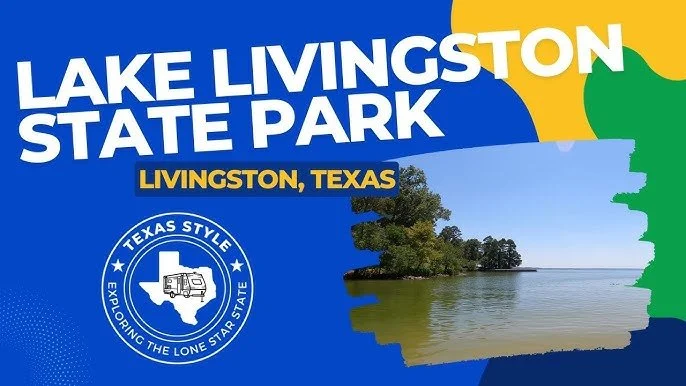
  • Lake Livingston State Park

    Lake Livingston State Park

      LAKE LIVINGSTON STATE PARK
    LAKE LIVINGSTON STATE PARK

    LAKE LIVINGSTON STATE PARK

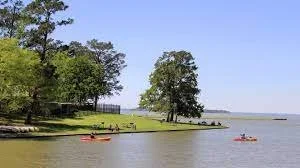
    There is an abundance of state parks near Houston, but this has to be one of our favorites. 

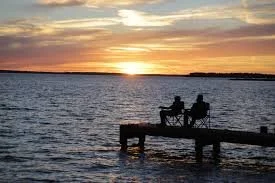
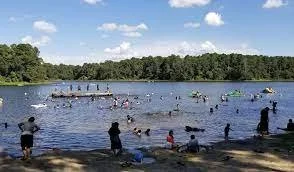
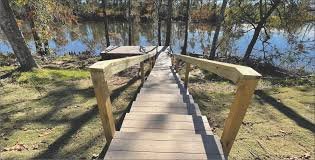
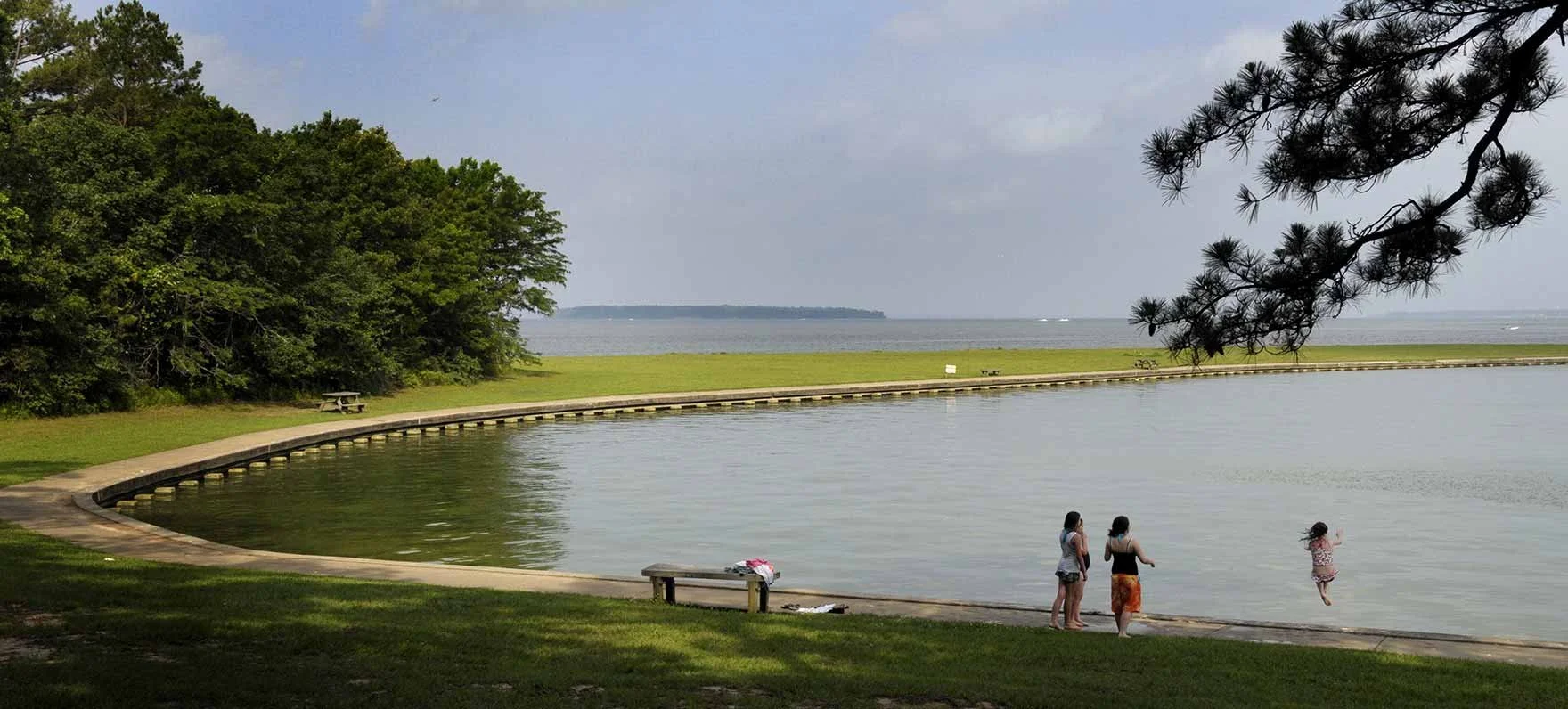
    About an hour north of the city, you can find the tranquil shores and spectacular sunsets of Lake Livingston.

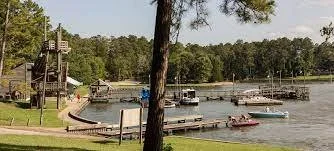
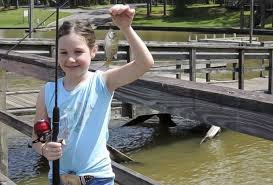
    It’s the second-largest lake in the state, so there’s tons of space to boat, fish, swim, kayak, and stand-up paddleboard.

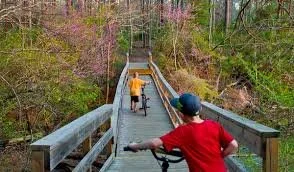
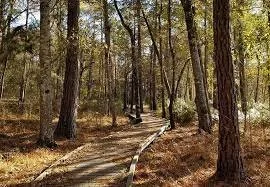
    On land, enjoy hiking along quiet, wooded trails, searching for geocaches, and sampling reds and whites at one of the area’s many wineries.

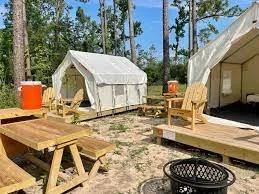
    And if one day just doesn’t feel like enough time to relax, there are dozens of overnight options, from campgrounds to cozy lakefront cabins.

    Lake Livingston State Park contains 635.5 acres along Lake Livingston a 84,800-acre reservoir. It’s located near the ghost town of Swartwout, a steamboat landing on the Trinity River in the 1830s and 1850s and the meeting place of Polk County’s first commissioners court before voters selected Livingston as county seat.

    Native emergent plants are limited to the upper areas of the reservoir and in the backs of coves and embayments. The floating exotic water hyacinth is found throughout the reservoir. Lake Livingston is a notable white bass fishery. White bass are plentiful and grow to large sizes. The catfish fishery is dominated by blue catfish. Largemouth bass, striped bass, and crappie are less abundant but good catches are possible in areas of the reservoir where habitat is available.

    Flora/Fauna:
    Park vegetation includes pine-oak woodlands, dominated by loblolly pine and water oak. Typical wildlife of the pineywoods includes an occasional white-tailed deer, mallard duck, raccoon, armadillo, swamp rabbit, or squirrel. Popular fish include crappie, perch, catfish, and bass.

    Activities:
    * Camping
    * Picnicking
    * Swimming pool (Memorial Day to Labor Day)
    * Mountain biking
    * Nature study
    * Fishing
    * Boating
    * Day use equestrian is now available: Visitors use the horses provided by Lake Livingston stables and are not allowed to bring their own horses.

  • Brazos Bend State Park

    Brazos Bend State Park

     BRAZOS BEND STATE PARK
    BRAZOS BEND STATE PARK

    21901 FM 762

    Needville, TX 461

    (979)-553-5101

    Brazos Bend Visitors Center

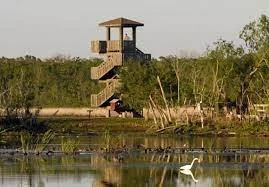
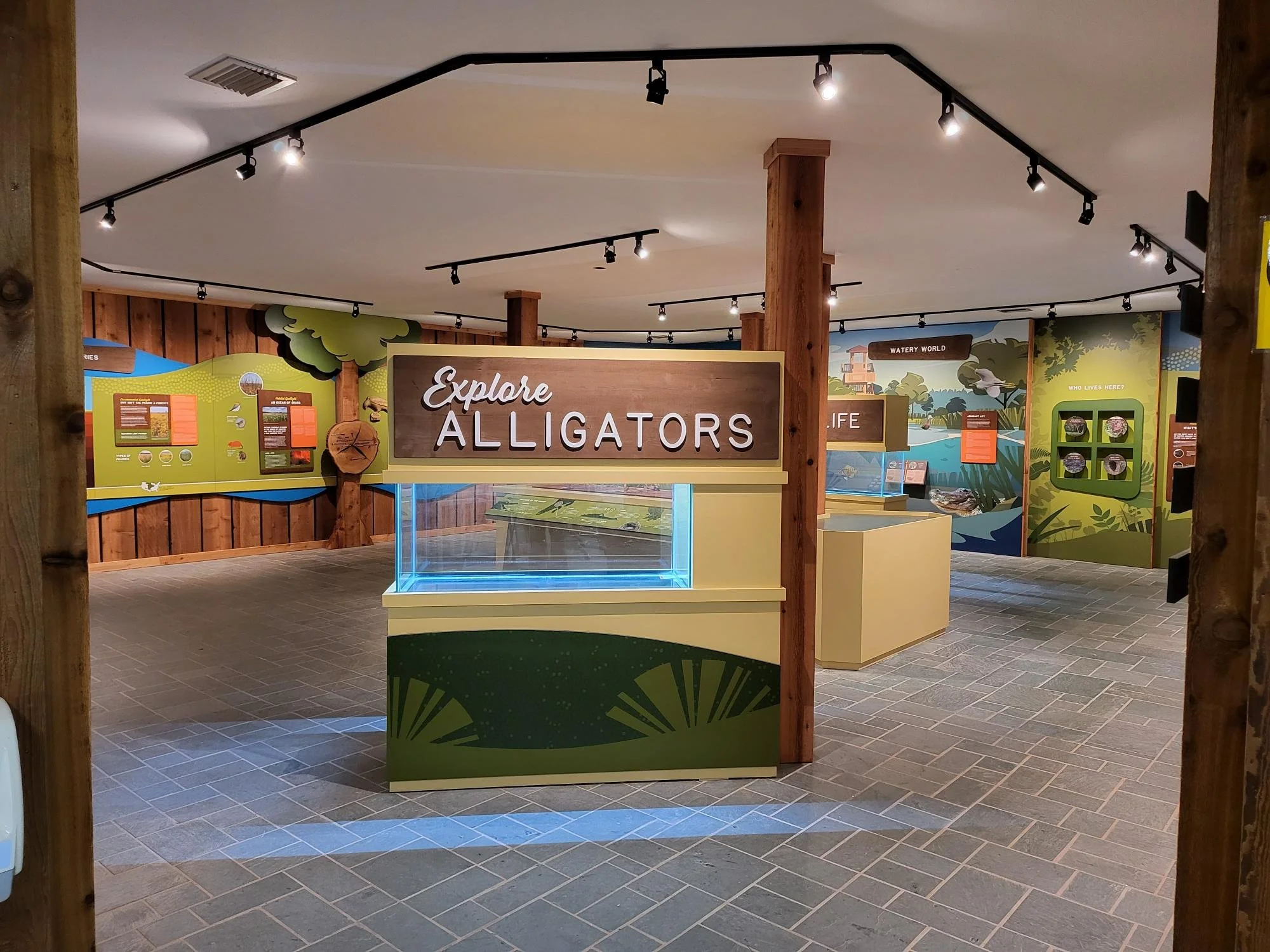
    Designed and fabricated in partnership with HW Exhibits, this visitors center features a total remodel. Educational graphics and displays around the space give guests a lesson in the history and environmental importance of the area. Brazos Bend State Park is a 4,897-acre state park along the Brazos River near Houston, run by the Texas Parks and Wildlife Department. The park is a haven for a diverse mix of native wildlife and plants covering an equally diverse range of ecosystems.

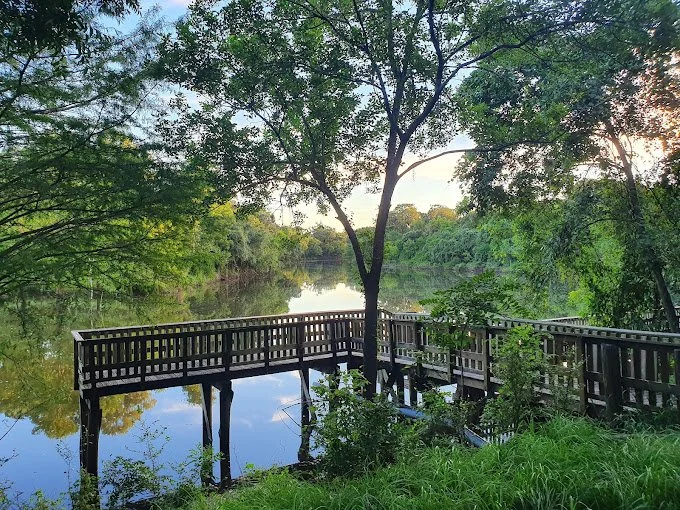
    Less than an hour outside Houston, you can treat yourself to pristine nature, 37 miles of hiking trails (and biking trails, too), and one of the largest domed telescopes in the country open to the public (found at the George Observatory).

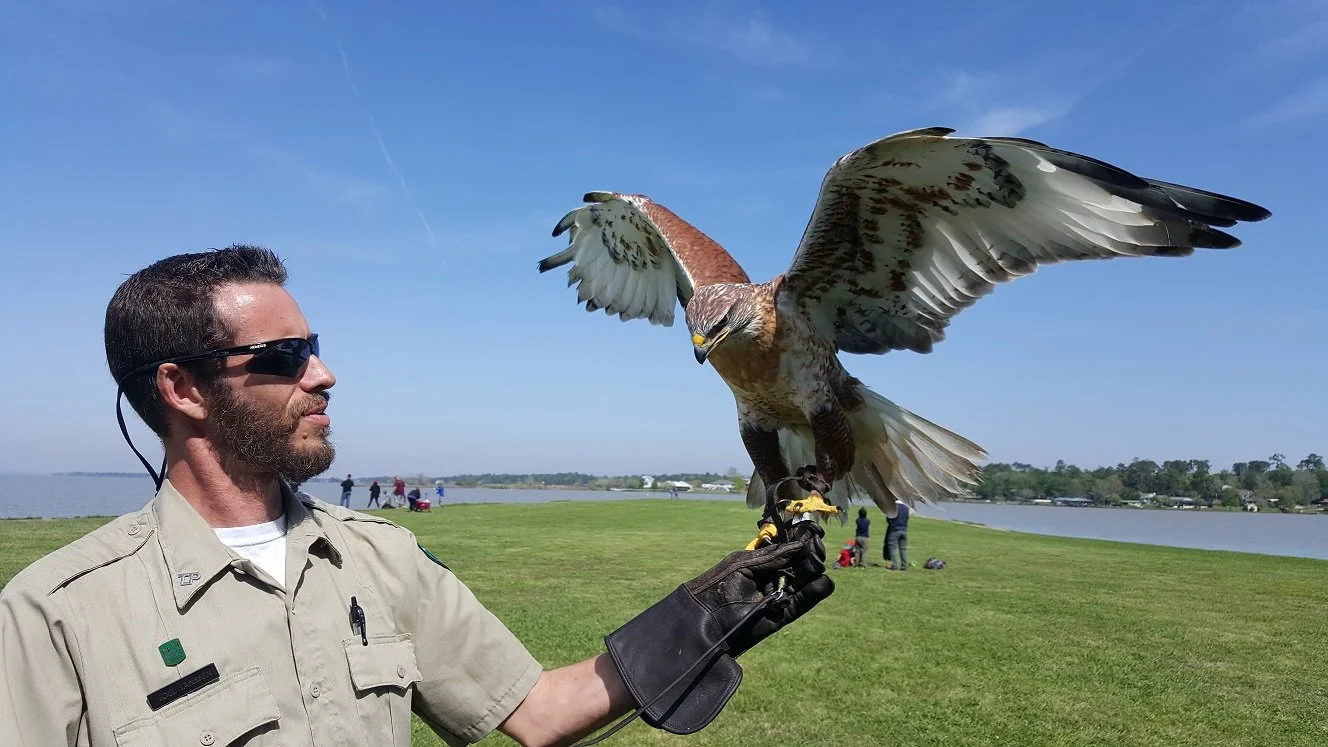
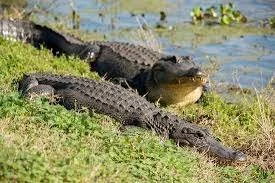
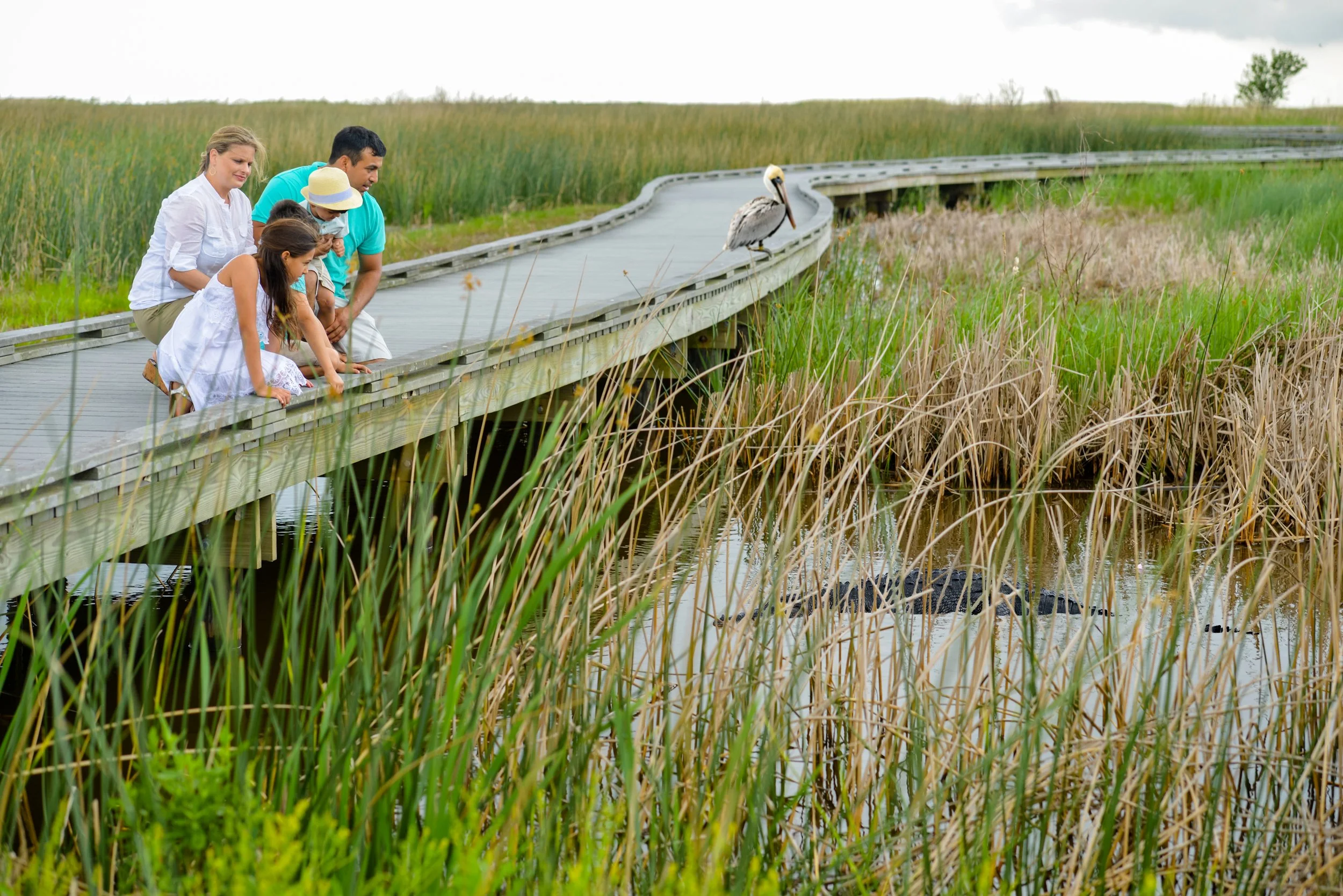
    The park’s most iconic residents are the American alligators, but it also houses river otters, wild pigs, white-tailed deer, and well over 300 species of birds.

    To learn more about the wildlife, you can opt for a guided hike offered through the nature center. Entrance to the state park costs $7 per person for a day pass.

  • Sam Houston National Forest

    Sam Houston National Forest

    SAM HOUSTON NATIONAL FORREST

    Although this lovely spot is just an hour from downtown Houston, it feels like a whole new world.

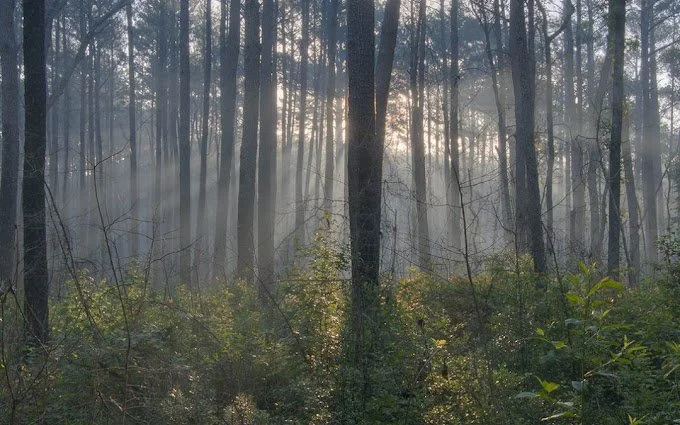
    Sam Houston National Forest promises dense, tranquil woodlands, meandering lakeshores, and tons of wildlife. 

    Bald eagles can be spotted in the winter, while deer, woodpeckers, and other native species are year-round residents of the area.

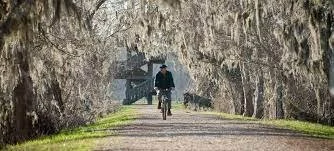
    Up for a challenge? The longest continuous hiking trail in Texas and one of our favorite trails near Houston (stretching a whopping 129 miles!) runs straight through the national forest.

    Although you won’t have time for all of it, the route has numerous points where you can hop on and off, perfect for day hikers.

    RECREATION

    Hiking – Hiking is a popular way to enjoy the forest and its beauty. The 128-mile Lone Star Hiking Trail, a portion of which has gained National Recreation Trail status, winds through the Sam Houston National Forest. The trail, marked with two-inch by four-inch aluminum markers to guide hikers, has recreation areas available at three different points. Except during deer hunting season when camping is restricted to designated camps, primitive camping is allowed off the trail. Potable water is available at Double Lake and Stubblefield recreation areas.

    Lone Star Hiking Trail consists of three major sections. The 40-mile Lake Conroe section, lying west of Lake Conroe, begins near the intersection of FS 219 and FM 149 and has four connecting loops.

    The Central Area of the trail runs eastward from Stubblefield Recreation Area, through the Four Notch area to Evergreen and then south down FM 945 to the trailhead parking lot. The Four Notch Loop, a 9.2 mile section, is in the middle of this 60-mile area of trail. The Winters Bayou/Tarkington Creek Area of the trail runs from FM 945 east to Double Lake Recreation Area, then south through Big Creek Scenic Area and then southwest through Winters Bayou. This 27-mile section of the trail has National Recreation status.

    The Lone Star Hiking Trail may be hiked year round, but winter and spring are the most popular seasons due to the mild southeast Texas climate. During deer hunting season in November and December, hikers should wear highly visible clothing. Usually the trail is not crowded, and hikers may observe a multiple-use managed forest with many ages and kinds of trees, plants and wildlife. Trail visitors may also view rivers, creeks, lakes and streams that meander through and around the Sam Houston National Forest. Off-road vehicles are prohibited.

    Little Lake Creek Wilderness – The 3,855-acre Little Lake Creek Wilderness is on the western edge of the pineywoods of East Texas about five miles north of the City of Montgomery. It was designated wilderness in 1984 under the Texas Wilderness Act. The area derives its name from the perennial creek of the same name that flows south through the center.

    The wilderness area is bisected by three major creek drainages: Little Lake Creek, Pole Creek, and Sand Branch. Those drainages create a rich ecological mosaic. Loblolly and shortleaf pines dominate ridgetops that are separated by a wide variety of hardwoods along the creek channels. The area is bounded by private land to the south, FM 149 to the east, FS 211 and an abandoned pipeline right-of-way to the west, and FS 231 to the north.

    Big Creek Scenic Area – The 1,420-acre Big Creek Scenic Area was established in 1962 as a special interest area. Noted for its vegetative diversity and scenic qualities, the area was set aside primarily for recreational enjoyment. No camping is allowed in Big Creek Scenic Area. The Lone Star Hiking Trail goes through the scenic area offering four trail loops of various lengths for hikers to enjoy. Big Creek Scenic Area is approximately six miles west of Shepherd, and a parking lot is conveniently located off FS 217.

    Camping – There are three developed campgrounds in the Sam Houston National Forest (Cagle, Double Lake & Stubblefield Recreation Areas). Cagle and Double Lake facilities are available by reservations or on a first-come, first-served basis if not previously reserved. Reservations for Cagle may be made at the recreation area or by calling the National Recreation Service. Stubblefield is available on a first-come, first-served basis only. Reservations can be completed by calling the National Recreation Service at 1/877/444-6777 or by internet at www.recreation.gov.

    Cagle Recreation Area is located along the shoreline of Lake Conroe on the west fork of the San Jacinto River. Cagle is a new campground with full service hook-ups. It has a boat ramp with large parking lot, 48 camping spurs with electric, fresh-water & sewer connections, hot showers with restrooms, lakeshore hiking & bicycle trails, wildlife viewing, Lake Conroe boating and water sports, fishing, a picnic area overlooking Lake Conroe, shoreline wading, 85 miles of OHV, equestrian and mountain bike trails close as well as 129 miles of hiking on the Lone Star Hiking Trail. Swimming is not allowed. This area is covered with beautiful large pine and hardwood trees plus thousands of colorful wildflowers. Mid February redbud tree blossoms followed by dogwood tree blossoms in early March are a spectacular outdoor flower show.

    Cagle is five (5) miles west of Interstate 45 on state road FM-1375 at New Waverly, Texas.

    Double Lake Recreation Area is located on the east side of the Sam Houston near Coldspring, Texas, surrounding a 24-acre lake and includes whispering pines and hardwoods one mile south on FM-2025. Built initially in 1937 by the Civilian Conservation Corps, Double Lake Recreation Area facilities includes family camping units, group camping, picnicking units, a picnic shelter, swimming area and beach, and a concession stand with bathhouse. Each family camping unit has a table, fireplace, tent pad, parking spur, and lantern-holder post. There are units with water, sewer, and electrical hook-ups. Picnic units have tables and fireplaces.

    Canoes and paddleboats can be rented at the concession stand at Double Lake which also has groceries, ice, and other items for sale. Bass, bream, and catfish have been stocked in Double Lake, and fishing is permitted under applicable state laws. Only small electric motors are allowed on the lake. Double Lake Recreation Area also provides access to the Lone Star Hiking Trail.

    Scotts Ridge Day-Use Area is located on the west edge of Lake Conroe approximately 2 miles North of FM 1097 on Forest Service Road 212. Facilities include public boat ramp on Lake Conroe, an adjacent parking area that will accommodate most boat trailers and vehicles and 1 vault toilet. No overnight camping is allowed. The boat launch area is open year-round, and the day-use area is open during the spring and summer months. Call the district office for open season dates. Use of the boat ramp, parking area, and picnic shelters are on a first come, first serve basis.

    Stubblefield Recreation Area located on the west side of the Sam Houston National Forest along Lake Conroe where Forest Service Road (FSR) 215 cross the west fork of the San Jacinto River. Located on the north shore of Lake Conroe, Stubblefield has 28 camping units and also provides access to the Lone Star Hiking Trail. Hot showers with restrooms are available for all campers and day-use visitors. Stubblefield is a beautiful forest setting for fishing, hiking, birding, hunting or camping for an enjoyable outdoor experience in the National Forest.

    Kelly Pond Recreation Area and Multiple-use Trailhead is located west of Interstate 45 approximately eight (8) miles along FM-1375 west of New Waverly. This site offers close locations to the multi-use (dirt bike, equestrian & mountain bike) trails and Lone Star Hiking Trail and has a restroom available. Picnic tables and campsites with lantern post and grills are available. Kelly Pond offers more primitive camping experience and is surrounded by Sam Houston National Forest and all it’s splendor.

    Fishing – On the northeast boundary of the forest lies the 82,600-acre Lake Livingston. Lake Conroe, to the southwest, offers 22,000 acres of water-oriented recreation. Both lakes are noted for black bass and year round fishing. The Forest Service provides three access points to Lake Conroe. A boat slip on the San Jacinto River near Stubblefield Recreation Area north on the lake, a boat ramp along the northeastern shore of Lake Conroe at Cagle Recreation Area, and another boat ramp is at Scotts Ridge on the southwestern shore of the lake.

    Hunting – The entire Sam Houston National Forest is designated as a wildlife management area through a cooperative agreement between Texas Parks and Wildlife Department and the U.S. Forest Service. This special designation provides benefits to those who use the Sam Houston National Forest, including hunters, and to the wildlife that live or forage there. Extra fees paid by hunters who use wildlife management areas are collected by Texas Parks and Wildlife Department and are returned to the Forest Service for use in those areas. These funds pay for a variety of programs to improve wildlife habitat and other enhancement programs such as wild turkey restoration, creation of wildlife openings and additional law enforcement. They can also be used to gather and analyze data to improve wildlife habitat. Those who wish to hunt deer or small game in the Sam Houston National Forest must purchase the appropriate wildlife management area hunting permit available where state hunting license are sold. Hunters and those who accompany them must wear hunter orange while hunting with a firearm in the Sam Houston National Forest. Hunters and fishermen are required to have a Texas license and follow State regulations.

    Boating – Both Lake Conroe and Lake Livingston offer fine pleasure boating and water sports. Lake Conroe and the southern section of Lake Livingston offer open water for sailing.

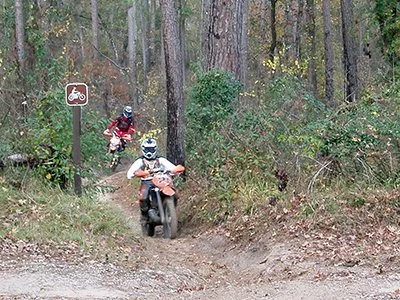
    Multiple-use Trails – The Sam Houston National Forest offers 85 miles of multiple-use trails designated and developed for hiking, biking, horses, and registered Off-Highway Vehicles (OHVs). Offering a variety of unique riding conditions, the multiple-use trail in the Sam Houston is the only trail open to OHVs in the National Forests in Texas. To promote sustainable and safe riding opportunities, trails are closed when conditions such as soil moisture could lead to trail damage. Before visiting please call the Ranger’s Office at 936-344-6205 or 888-361-6908 and select option 2 for trail status.
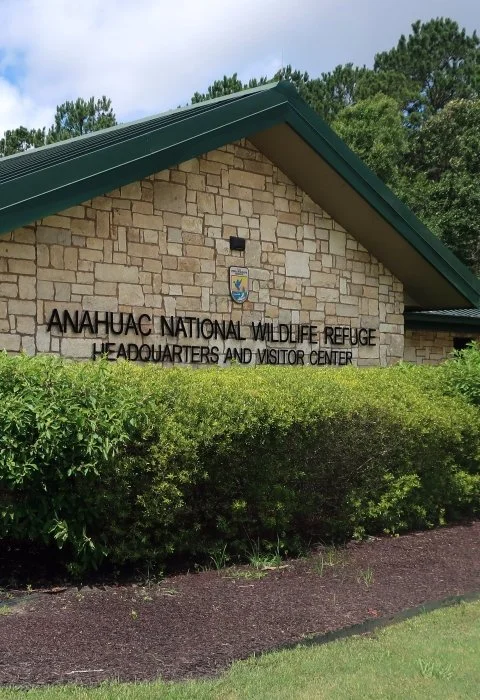
  • Anahuac National Wildlife Refuge

    Anahuac National Wildlife Refuge

     ANAHUAC National Wildlife Refuge
    ANAHUAC National Wildlife Refuge

    ANAHUAC NATIONAL WILDLIFE REFUGE

    The best day trips from Houston trade bustling downtown streets for pristine natural landscapes and outdoor activities, and that’s exactly what you’ll discover at the Anahuac National Wildlife Refuge.

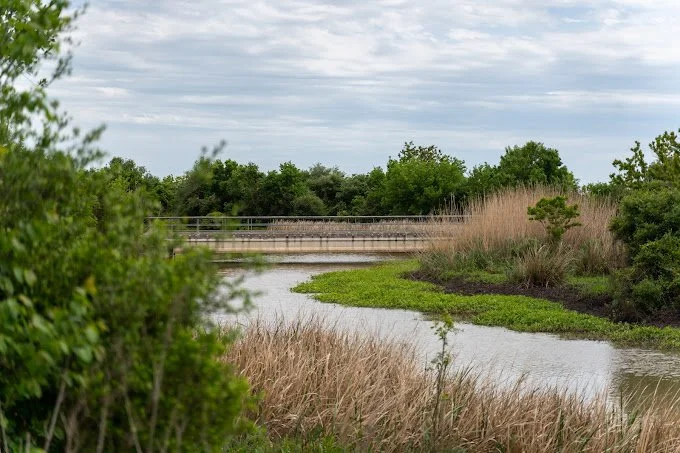
    The 2-hour drive from the city wanders over lakes and wraps around the scenic Trinity Bay before depositing guests among the meandering bayous of the refuge.

    There, you can venture out on a number of nature trails (keep an eye out for alligators!), enjoy the colorful butterfly garden, and search for shells and sea turtles along the shoreline.

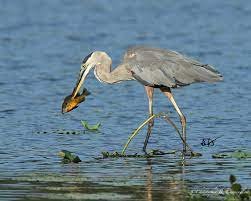
    Birders will be in paradise, with hundreds of species of waterfowl and shorebirds to observe (pelicans, storks, geese, sandpipers, etc.), as well as the chance to spot larger raptors.
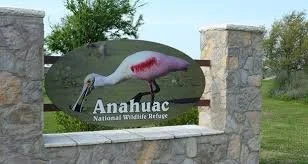
    Home to hundreds of thousands of birds you can see on a drivable car-loop, the coastal marsh and prairie habitat is a year-round birding hotspot that only gets hotter during spring migration. Waterfowl and shorebirds are common throughout the bayou, but perhaps the most exciting is the potential for raptors. Once an ancient flood plain, the area is now teeming with flora, fauna, and feathered friends.
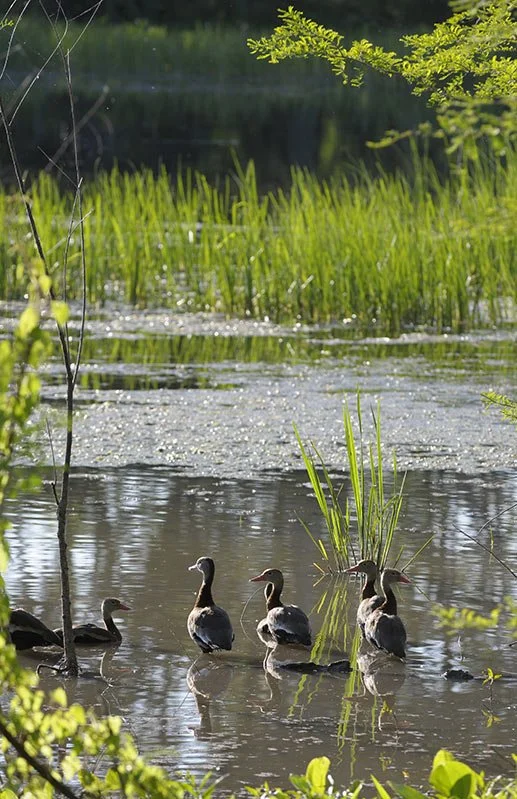
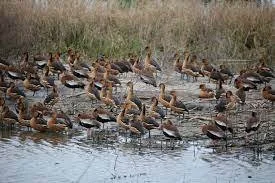
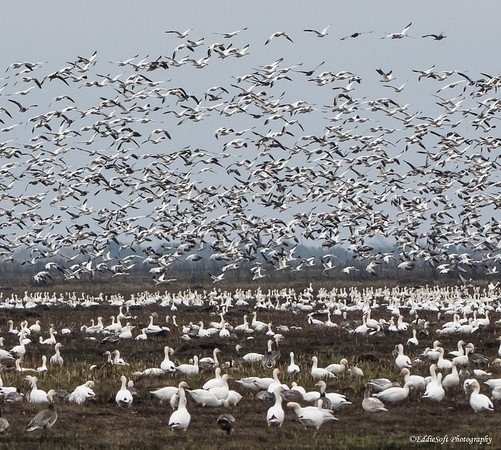
    Tens of thousands of geese make landfall in winter, most commonly the Snow. Greater White-fronted is also abundant with Ross’s Geese present in smaller numbers. Thousands of ducks in over 15 species call the area home and you can expect to see the Fulvous and Black-bellied Whistling, but most Fulvous head south for the winter. It’s also a great location to spot American Bittern, White-tailed Hawks, and White-tailed Kite during the colder months. Migration brings thousands of shorebirds if the water levels are right. Hudsonian Godwit and White-rumped Sandpiper are two of the highlights along with vagrants such as Ruff and Surfbirds. Swallows are common in the refuge and Cave is regular from spring-fall. In the spring and summer, Purple Gallinules and Least Bitterns usually give good looks.  

    Smith Point is a fantastic location to catch the fall migration. There’s an official raptor count so there is always a good birder or two present. Large numbers of geese and ducks can be seen, such as Franklin’s Gulls, Wood Storks, Anhingas, big flocks of American White Pelicans, Mississippi Kites (peak days in the thousands), Broad-winged Hawks (peak days in the tens of thousands), hundreds of Eastern Kingbirds, and Scissor-tailed Flycatchers in the late summer/fall, thousands of swallows (seven species), hundreds of Blue-gray Gnatcatchers, and smaller numbers of other migrants. 

    •    Major Birding Sites: Anahuac National Wildlife Refuge Shoveler Pond Loop, Willows Trail, Skillern Tract
    •    Additional Areas: Candy Cain Abshier Wildlife Management, Smith Point and James H. Robbins Memorial Park

  • Hermann Park

    Hermann Park

    6001 Fannin Street

    Houston, TX 77030

    (713) 526-2183

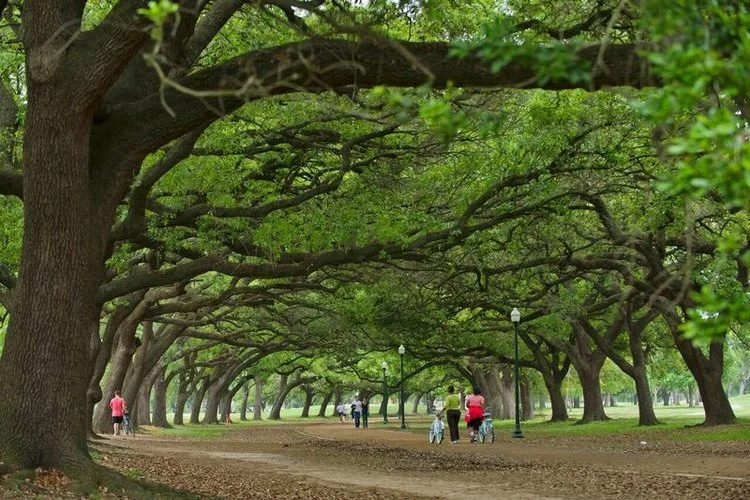
    Hermann Park has a bountiful assortment of entertainment: a golf course, an outdoor theater, a jogging track, a beautiful rose garden, picnic spaces, a butterfly exhibit, and even a museum on 445 acres

    Hermann Park, presented to the City of Houston by George Hermann in 1914, is Houston’s most historically significant public green space. Over the years, the Houston Zoo, Miller Outdoor Theatre, the Houston Museum of Natural Science, Japanese Garden, Rose Garden and Hermann Park Golf Course, one of the first desegregated public golf courses in the United States, all have added to the Park’s importance as a recreational destination.

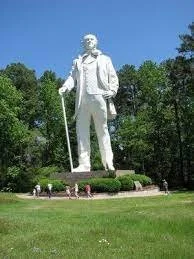
    Hermann Park, located minutes from downtown Houston, is a cultural and recreational hub surrounded by the Texas Medical Center, Rice University, the Museum District, and various residential neighborhoods. The entrance to the park is at the intersection of Main St. and Montrose Blvd. Upon arriving at Hermann Park the visitor is greeted by a statue of one of Houston’s founders, General Sam Houston. He points in, towards the park, leading the park visitor in the direction of it’s many amenities.

     McGovern Centennial Gardens and the Cherie Flores Garden Pavilion:
    Renovated in 2015, the Centennial Garden has completely transformed the original 15-acre Garden Center site into a stunning attraction for Park visitors.The Gardens feature a Family Garden, Centennial Green, 30’ Garden Mount, Celebration Garden, Rose Garden, and the Cherie Flores Garden Pavilion. As you explore the Gardens you will come across 490+ new trees of over 50 different species, 760 hedge shrubs, 350 new roses in the Rose Garden, 106,875 other shrubs and perennials of 199 varieties, 115 new camellias and 650 new azaleas in the Woodland Garden and so much more.

    Japanese Garden:
    An island of serenity nestled in a pine grove near the Sam Houston Monument, the garden was designed by world-renowned Japanese landscape architect Ken Nakajima and built to symbolize the friendship between the U.S. and Japan. Recognizing Houston’s thriving Japanese community, the garden is built on 5 acres and combines a traditional Japanese Garden design with a touch of Texas.

    Miller Outdoor Theatre:
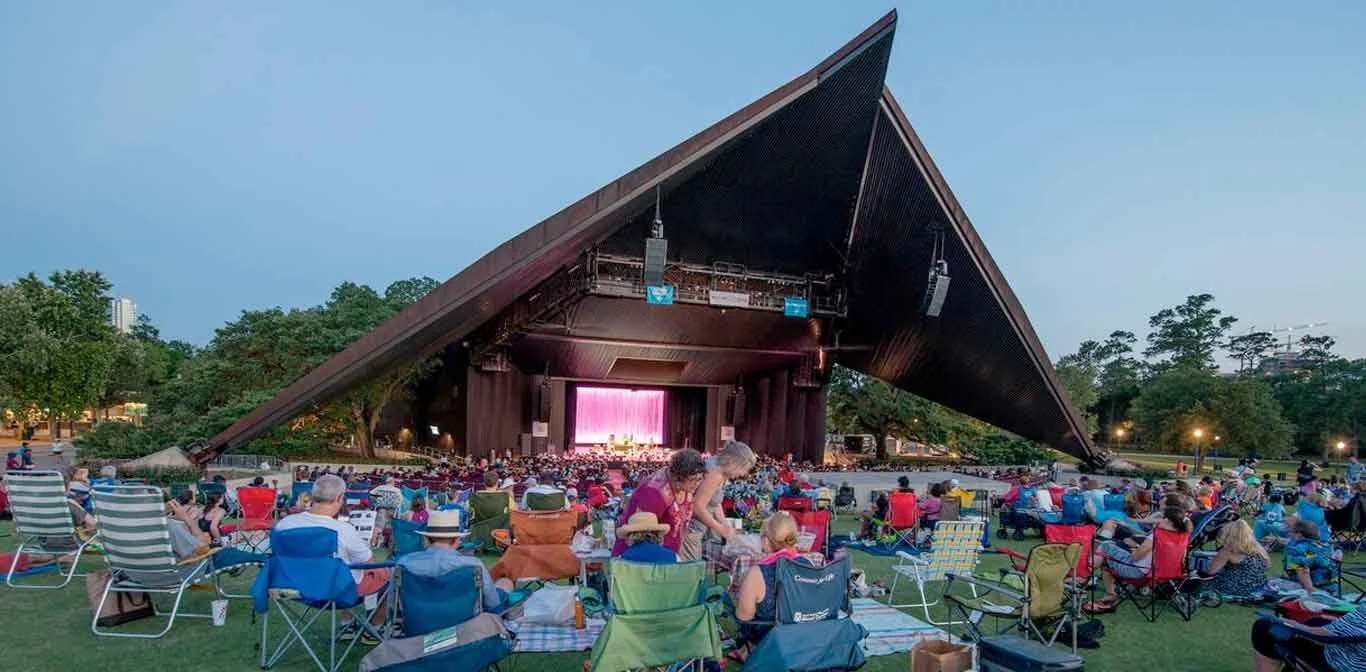
    A free, open-air theatre, host to a variety of multi-cultural events, allows visitors to catch a concert or play while picnicking in one of Houston’s most popular parks. Rain or shine, a wide variety of family-friendly performances include Cinco de Mayo, Fourth of July festivities, Shakespeare in the Park, the Houston Ballet, and the Houston Grand Opera performances.

    Houston Zoo:
    Founded in 1922, this recreational destination serves 1.4 million guests annually and is set in a lush 55-acre landscape right in the middle of Hermann Park. The Houston Zoo is home to more than 3,100 exotic animals representing more than 500 species. It is one of the largest collections in the nation and is considered one of the best-maintained zoos in the country.

    Hermann Park Golf Course:
    In 1922, the lush and scenic 18-hole Hermann Park Golf Course was built, starting a rich tradition of golfing excellence that has prospered for more than 70 years. The golf course was the first public golf course in America to welcome all races. Play golf under the majestic emerald canopy of stately oak trees and its manicured, plush Bermuda greens. Unwind on the airy veranda of the historic clubhouse, and satisfy your appetite with delicious food, combined with impeccable service.

    McGovern Lake:
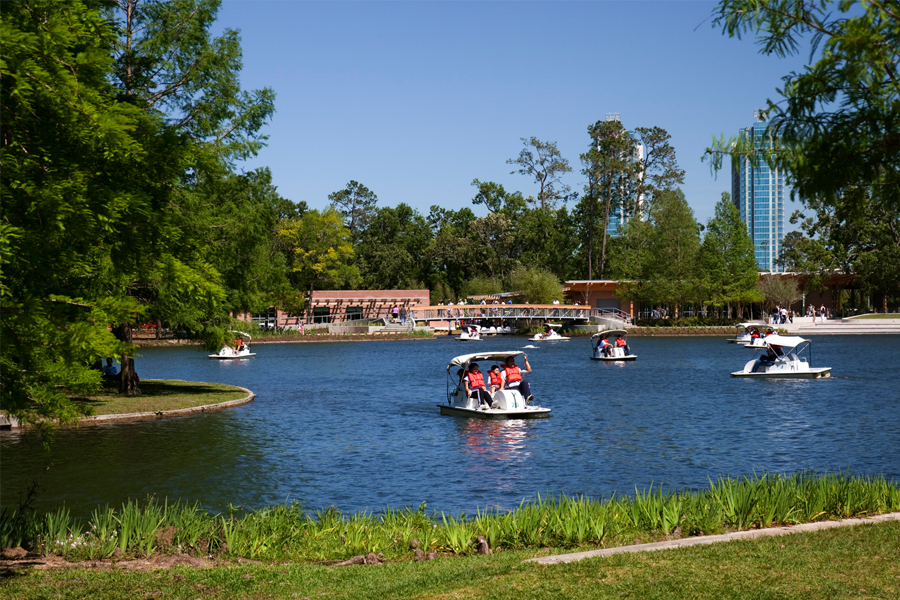
    This 8-acre masterpiece is newly restored and expanded, creating two new islands for migratory birds, and a third island that the miniature train travels. Pedal boats are available to rent at the boathouse and catch-and-release fishing available for children under 12 and senior citizens over 65 at Bob’s Fishing Pier.

    Activities:
    * Fishing
    * Boating (pedal boat rentals available)
    * Miniature Train
    * Golf
    * Japanese Garden
    * Hike and Bike trails
    * Miller Outdoor Theatre
    * Houston Zoo

  • Discovery Green

    Discovery Green

    Discovery Green

    1500 McKinney St

    Houston, TX 77010

    (713) 400-7336

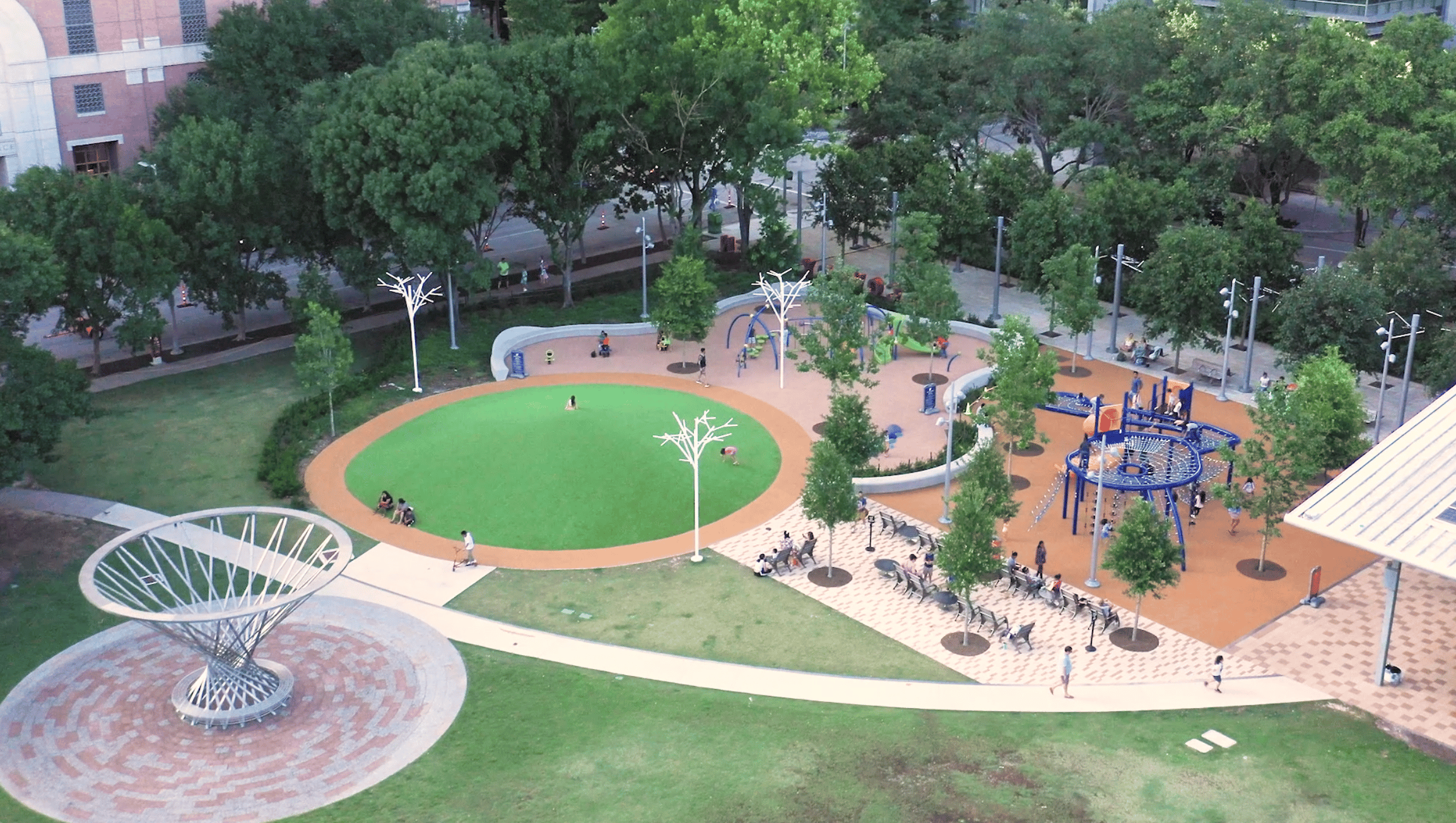
    A world of discovery

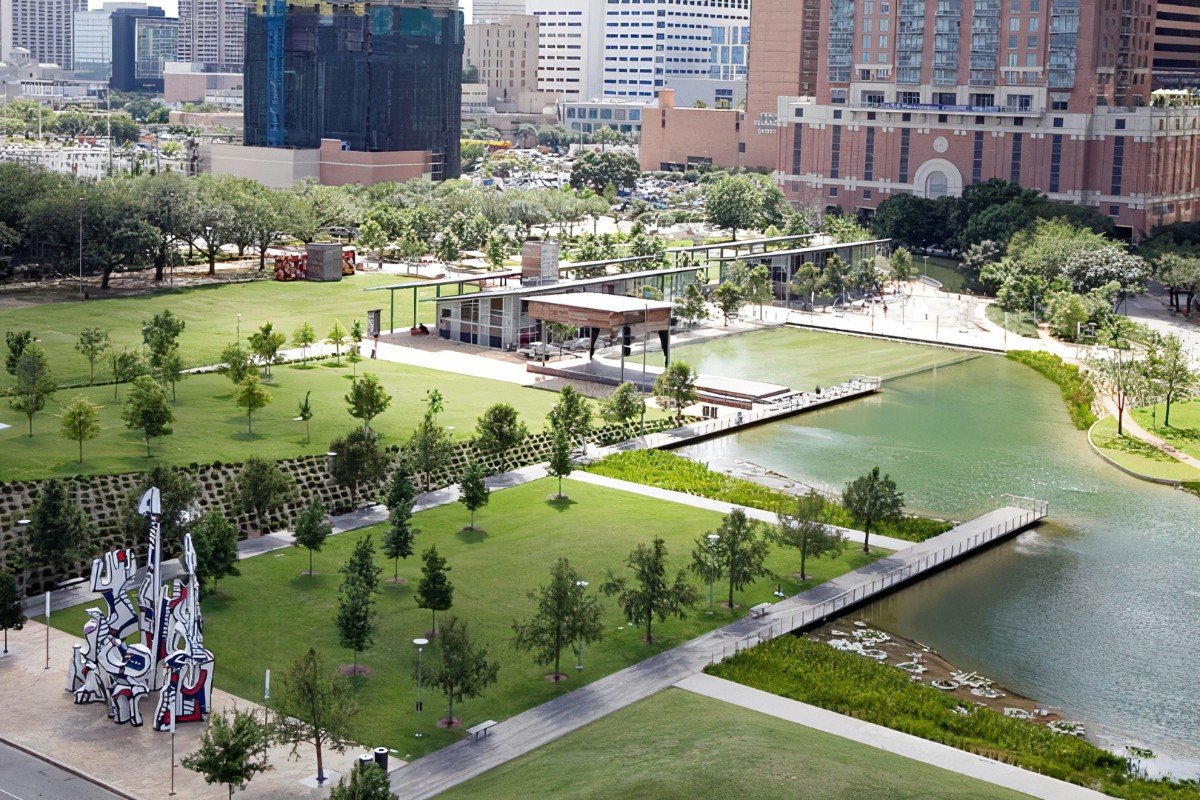
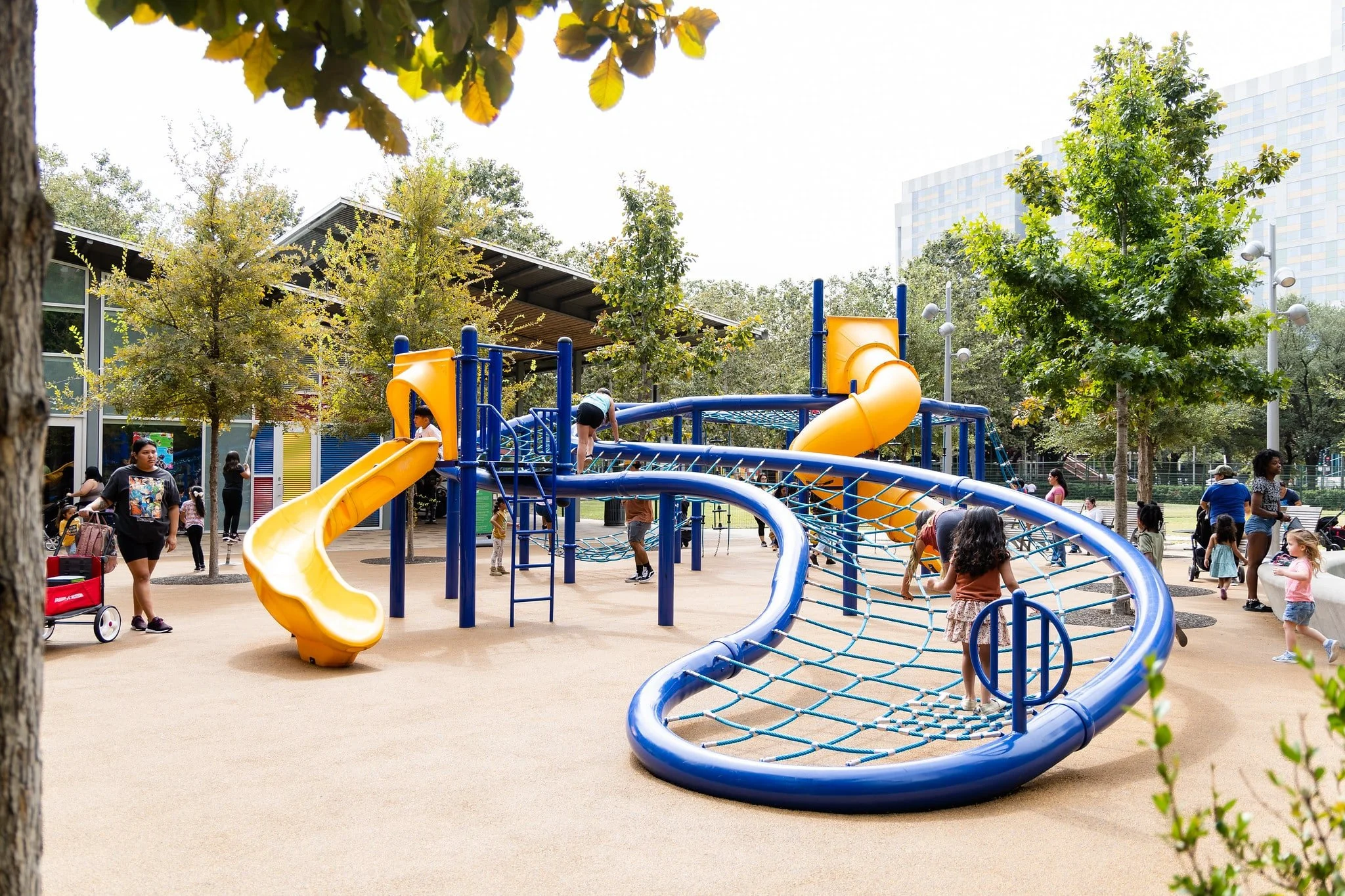
    in the heart of Houston.

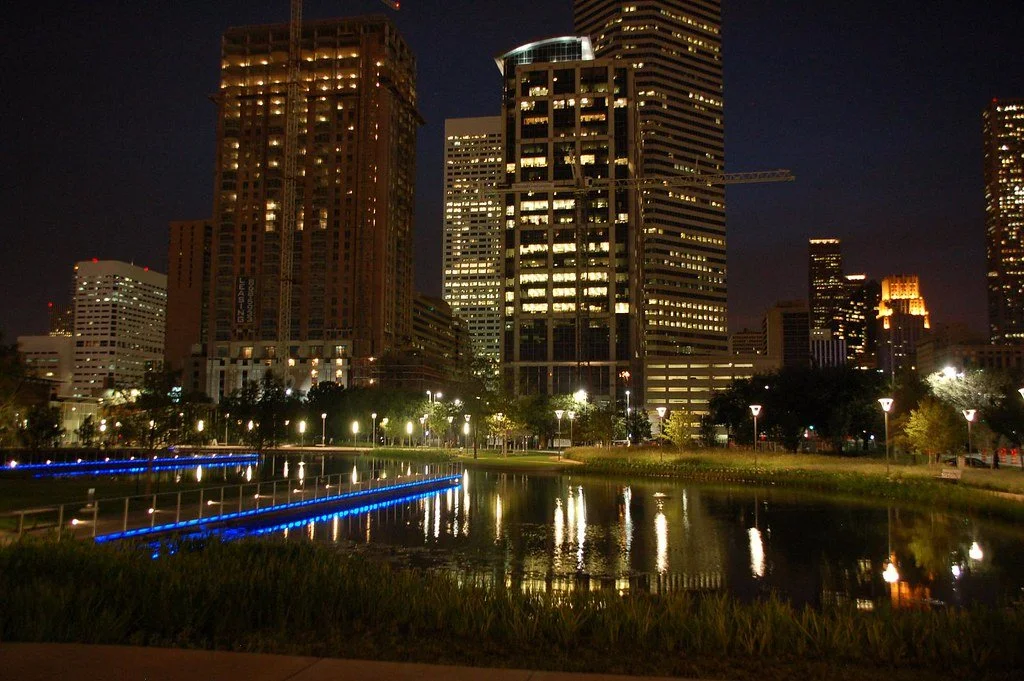
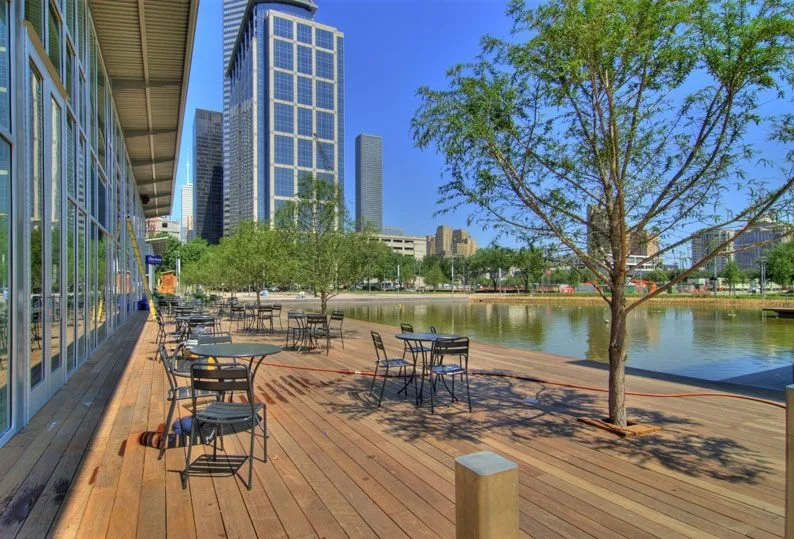
    Discovery Green is a 12-acre village green at the heart of downtown Houston where you’ll find space to relax, explore, and learn. With two restaurants, a water park for kids, a 1-acre lake open kayaking, dog runs, an amphitheater, an event lawn and so much more. Since the park opened in April 2008, it has welcomed more than 20 million visitors and with hundreds of events a year.